

In Brief
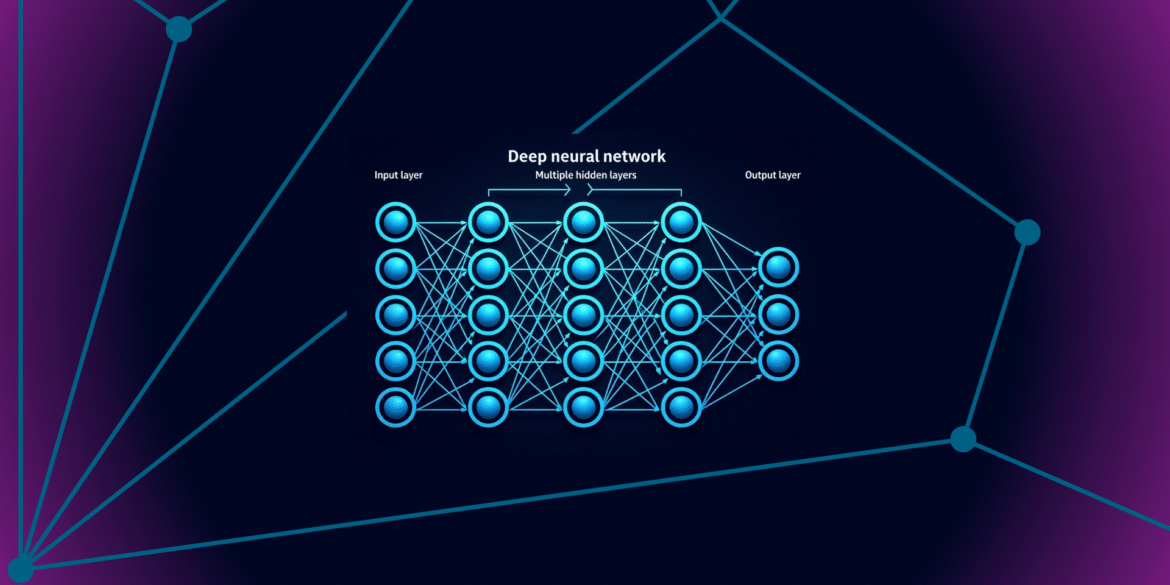
A neural network is a computational model inspired by the human brain’s structure and function. It consists of interconnected artificial neurons that process and transmit information, enabling computers to recognise patterns, make decisions, and solve complex problems in artificial intelligence and machine learning.
The Details
Neural networks, also called artificial neural networks (ANNs), are a core technology in machine learning and deep learning. They mimic how biological neurons work together to identify patterns, evaluate options, and reach conclusions. Neural networks are especially powerful for learning from data without explicit programming, supporting functions like image recognition, natural language processing, and autonomous systems.
Core Components and Structure
-
Neurons (Nodes): Basic units that receive inputs, perform calculations, and generate outputs for the next layer.
-
Layers:
-
Input layer receives raw data such as images or text.
-
Hidden layers transform the data via interconnected neurons.
-
Output layer produces the final prediction or decision.
-
-
Weights and Biases: Parameters tuned during training that control the influence of inputs and activation thresholds.
-
Activation Functions: Apply non-linear transformations (e.g., ReLU, sigmoid) to capture complex patterns beyond linear relationships.
How Neural Networks Work
-
Input processing: Raw data enters the input layer.
-
Weighted calculations: Inputs are multiplied by weights and summed up with biases.
-
Activation: The activation function decides whether neurons activate, introducing non-linearity.
-
Output generation: The final layer produces the network’s prediction or classification.
Training Process
-
Initialisation: Weights and biases start with random values.
-
Forward propagation: Data passes through the network generating outputs.
-
Error calculation: The difference between predicted and actual outcomes is measured.
-
Backpropagation: Errors are sent backward to update weights and biases using gradient descent.
-
Iteration: This cycle repeats until the network reaches the desired accuracy.
Applications
Neural networks have diverse applications:
-
Image and speech recognition
-
Natural language processing
-
Financial forecasting
-
Medical diagnosis
-
Autonomous vehicles
Example
A neural network trained to recognise handwritten digits processes input images through its layers, identifying pattern features like curves and lines. When given an image of “7,” it outputs the classification “7” based on learned features.
Ongoing Advancement
Research continues to enhance neural networks’ ability to work with larger datasets, model complex systems, and adapt across various fields. Their evolving capabilities are central to driving innovations in AI and solving challenging real-world problems.
AI winter describes a cyclical downturn in the field of artificial intelligence (AI) when enthusiasm fades, funding contracts, and progress slows. These periods typically follow waves of optimism known as “AI summers,” when researchers, businesses, and the public expect rapid advancements, only to be disappointed by technical limitations.
Historical Context
AI history has been shaped by alternating cycles of growth and decline. The first AI winter began in the 1970s after initial excitement about expert systems was dampened by the reality that computers struggled to match human reasoning. Influential reports, like the 1973 Lighthill Report in the UK, highlighted the limited practical applications of AI and led to widespread cutbacks in funding.
A second major AI winter struck in the late 1980s and early 1990s, driven by the inability of expert systems to generalise or perform reliably outside of specialised tasks. Over-optimistic promises turned to skepticism, and organisations withdrew support, stalling research and commercial projects.
Causes and Consequences
AI winters are triggered by exaggerated promises, failure to deliver commercially viable solutions, and changing economic priorities. When products labelled ‘intelligent’ do not meet expectations, buyers become disappointed and shift resources elsewhere. These downturns have pushed researchers to focus on achievable milestones and rethink how AI is developed and marketed.
Although interest wanes during winters, the field does not disappear. Some research continues, laying foundations for future advances when optimism returns—often driven by new breakthroughs or technologies such as deep learning and big data analytics.
Recent Trends and Future Outlook
The current AI boom, fuelled by machine learning and transformative applications like language modelling, facial recognition, and autonomous vehicles, is unprecedented in scale. However, analysts warn that another AI winter could occur if cutting-edge systems fail to deliver widespread, robust value or if market hype outpaces technical reality. Lessons from past winters urge caution, innovation, and transparent communication about AI capabilities.
Examples
- Expert systems in medicine, like Mycin, showed initial promise but failed to scale beyond narrow domains, contributing to the 1980s AI winter.
- The Lighthill Report’s criticism of AI progress led to funding cuts and a long period of stagnation in British AI research.
- The collapse of commercial interest in neural networks in the 1990s was followed by their resurgence in the 2010s through deep learning.
References and Further Reading
- TechTarget: What is AI Winter?
- AIBC World: AI Winter History
- IOA Global: Are We Entering a New AI Winter?
- Tencent Cloud: AI Winter and Research
- Fortune: What Previous AI Winters Can Tell Investors
- H2O: AI Winter wiki
- History of Data Science: The Highs and Lows of Artificial Intelligence
- Forbes.com: Are We Headin into Another AI Winter?

A core principle is that wherever possible, we lean in to everything Australian-first. So, we ran an AI search for Aussie-designed fonts.
We found Australian font-creator geniuses like the Australian Type Foundry, but we were really looking for an everyday font we could redily adopt into our WordPress website. This also meant that Google fonts were the default choice.
The two that we chose – Platypi for our headings, and Work Sans for body text. Do you like them? (comment and let us know…). Whilst not an AI-generation activity per se, we did research (using Perplexity, our favourite Answer AI) whether AI was used in the development of either of these lovely fonts.
Work Sans was not generated with AI, nor is there any evidence that AI was used in its design or production. The font was designed by Wei Huang, who drew inspiration from early grotesque typefaces and developed the family using traditional digital type design tools and methods. The process involved manual design, refinement, and optimization for screen use, with no mention of AI assistance in any official documentation or designer statements.
Platypi, designed by Brisbane-based David Sargent, did involve the use of AI in its production process. While Sargent began by hand-sketching and refining letterforms using industry-standard software (Glyphs), he specifically used AI to help replicate kerning measurements at scale. This use of AI streamlined the spacing process between characters, making the workflow more efficient, but the core creative and design work remained human-led. There is no indication that AI generated the letterforms themselves, but AI was used as a tool to automate and scale certain technical aspects of the typeface development.
Platypi is our heading font. Work sans is our body font. A lovely pair, we think. We hope you like them too! What do you think? We’d love to hear in the comments.
Battery fires are really gas fires and generate massive heat. This makes car battery installation in a car park under an apartment building impractical as the heat from this kind of battery fire could damage the structure of the building.
Extend this issue to home bots with significant battery and recharge requirements.
OWL – In Brief
OWL (Optimized Workforce Learning) is an open-source AI framework designed to enable collaboration among multiple AI agents for automating complex real-world tasks. Developed by CAMEL-AI, it integrates advanced features like real-time information retrieval, multimodal data processing, browser automation, and code execution. OWL is currently ranked #1 among open-source frameworks on the GAIA benchmark for task automation.
The Details
OWL is a cutting-edge platform that allows AI agents to work together efficiently, each specialising in different skills to solve problems collaboratively. Built on the CAMEL-AI framework, it aims to revolutionise task automation across various domains by mimicking teamwork dynamics.
Key Features
- Real-Time Information Retrieval: Accesses up-to-date data from sources like Google Search and Wikipedia.
- Multimodal Processing: Handles videos, images, audio, and text seamlessly.
- Browser Automation: Simulates user interactions like scrolling, clicking, and downloading using the Playwright framework.
- Document Parsing: Extracts content from Word, Excel, PDF, and PowerPoint files.
- Code Execution: Writes and executes Python code dynamically.
- 100% open source
Performance Highlights:
OWL achieved an average score of 58.18 on the GAIA benchmark, making it the top-performing open-source solution in its category. It competes closely with proprietary systems in solving tasks that are simple for humans but challenging for AI.
Example Use Case:
Imagine needing to summarise a research paper while also analysing recent tweets about climate change. OWL’s agents can divide these tasks—one retrieving and summarising the paper while another analyses sentiment from social media—working together to deliver a comprehensive result.
OWL stands out as a robust tool for researchers, developers, and businesses aiming to leverage AI for complex task automation.
Resources & Further Reading
- OWL: Revolutionizing Multi-Agent AI Task Automation in 2025
- OWL: Optimized Workforce Learning for General Multi-Agent Assistance
- My First Look at OWL: A Fresh Approach to AI Automation
- camel-ai/owl: OWL: Optimized Workforce Learning for General Multi-Agent Workforces
- OWL download | SourceForge.net
- Camel AI – OWL GitHub
- YCombinator – Owl: Optimized Workforce Learning for multi-agent collaboration
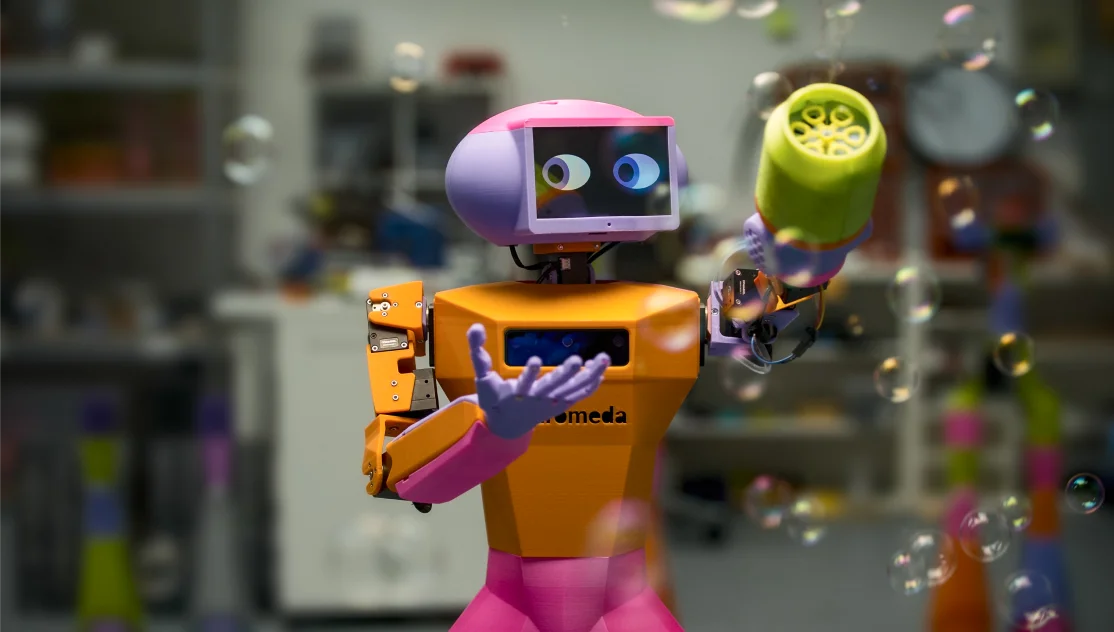
Caring for an ageing population has become one of Australia’s defining challenges — and opportunities — of the 2020s. With workforce shortages deepening across the aged-care sector, the integration of robotics is shifting from novelty to necessity. Enter Abi, Andromeda Robotics’ personalised social companion, designed to bring conversation, comfort, and cognitive support to older Australians.
Headquartered in Prahran, Melbourne, Andromeda Robotics specialises in developing socially intelligent service robots that blend human-like emotional understanding with AI-powered adaptability. Its flagship product, Abi, emerged from a three-year research and pilot program spanning hospitals, aged-care facilities, and individual homes in New South Wales and Victoria.
Abi isn’t designed to replace carers. Instead, its purpose is to assist them — to fill emotional and social gaps when human presence isn’t always possible. The robot can engage residents in natural conversation, remind users to take medication, initiate games or mental exercises, and detect signs of loneliness or distress through speech and facial recognition.
According to the Australian Institute of Health and Welfare’s 2024 report, over 1 in 6 Australians are currently over 65, with that figure expected to climb sharply by 2035. In parallel, the Department of Health estimates the sector faces a shortfall of 100,000 aged-care workers by 2027. Artificially intelligent companions like Abi present a partial solution to this structural deficit.Abi’s design focuses on approachability and comfort. Standing about one metre tall, the unit’s rounded aesthetic and soft facial cues were deliberately engineered to feel more therapeutic than technical. Using Andromeda’s EmotionSense™ AI modelling, Abi learns an individual’s emotional patterns, adapting its responses over time to mirror human empathy and recall user preferences — from favourite songs to daily routines.
At its core, Abi integrates three layers of intelligent technology:
- Conversational AI powered by natural language models trained for everyday English and multilingual contexts common in Australian households.
- Computer vision and sensor fusion, allowing Abi to recognise gestures, track movement, and ensure safety within care environments.
- Adaptive personality learning, enabling the robot to build and update an emotional profile for each user to personalise interactions.
This architecture connects to Andromeda’s secure cloud platform where anonymised data helps refine Abi’s responses while maintaining user privacy in alignment with Australian privacy laws (Privacy Act 1988).
Abi has already been trialled across more than a dozen aged-care facilities, including partnerships with providers on the East and West coasts. Feedback from early trials highlights measurable gains in resident engagement and mood stability, particularly among those with mild cognitive decline or limited family contact.
Andromeda Robotics is positioning Abi as a subscription-based hardware-as-a-service (HaaS) product — a model that aligns with both healthcare cost management and continuous AI improvement. Facilities can lease Abi units with built-in software updates and remote monitoring. Globally, aged-care robotics is projected to become a $25 billion industry by 2030, according to Deloitte’s 2025 forecast. For Australia, the technology holds dual potential: to support overextended carers and to strengthen the country’s leadership in ethical AI and care innovation.
Andromeda’s engineers are already exploring future integrations with telehealth systems, wearable health data, and hospital triage software. The long-term vision: creating a connected ecosystem where robotics, clinicians, and families collaborate through shared data and AI-driven insight.
CEO Dr. Emily Tran frames Abi’s mission not in terms of automation, but augmentation. “Abi isn’t here to replace care,” she says. “She’s here to ensure everyone, regardless of staffing pressures or geography, can have someone — or something — that listens, learns, and supports.”For an industry under pressure, Abi represents something rare: technology that not only scales but also humanises care delivery. The fusion of empathy with AI precision could soon make Abi as common in aged-care residences as blood-pressure monitors or mobility aids.
References & Further Reading
- Andromeda Robotics: Company Homepage
- Abi Product Information: Abi’s Product Page
- “Robot Abi gets an upgrade and $23m to grow” – Australian Ageing Agenda, 14 Sep 2025
- Andromeda raises $23m for global Abi robot launch (LinkedIn post)
- Andromeda raises AUD $23m to launch robots for aged care (IT Brief)
- Backed by women, Grace Brown secures $23m for robotics (Women’s Agenda)
- “Friendly and futuristic: how robots are changing life in aged care” – Talking Aged Care, 5 May 2025
Announcing Google Australia’s AI First Accelerator: Empowering Aussie Startups with Cutting-Edge AI
In a bold move to foster innovation and support the burgeoning AI ecosystem in Australia, Google has launched its AI First Accelerator program. This initiative, part of Google’s $1 billion Digital Future Initiative, aims to propel Australian startups leveraging AI and machine learning technologies to new heights12.
Program Overview
The AI First Accelerator is a 10-week, equity-free program tailored for Seed and Series A stage Australian startups building AI and ML-driven platforms and products. The program offers a unique blend of mentorship, technical support, and networking opportunities, connecting founders with Google’s AI experts and industry leaders3.
Key features of the program include:
-
Dedicated Expert Help: Startups are paired with Google specialists and industry experts to tackle specific technical challenges.
-
Specialist Deep Dives: Workshops focusing on product design, customer acquisition, and leadership development.
-
Google Cloud Credits: Eligible participants can receive up to $350,000 in Google Cloud credits.
-
TPU Access: 30 days of free Cloud TPU access through the TPU Research Cloud program.
Benefits for Participants
Startups selected for the program can expect to gain:
-
AI Expertise: Access to cutting-edge AI training and workshops led by Google’s specialists.
-
Mentorship: Guidance from experienced AI entrepreneurs and Google professionals.
-
Technical Support: Deep dives into AI tools and infrastructure.
-
Networking: Opportunities to connect with other top-tier AI startups from across Australia and globally.
-
Responsible AI Training: Insights from Google’s People + AI research team on ethical AI development.
Australian Context
Australia has a rich history of technological innovation, from healthcare breakthroughs to advancements in climate resilience and creative industries. The AI First Accelerator builds on this legacy, aiming to position Australian startups at the forefront of global AI innovation2.
Future Opportunities
While the inaugural program has already commenced, interested startups and entrepreneurs can register their interest for future programs. This ensures they’ll be notified when the next round of applications opens.
To express interest in future AI First Accelerator programs, visit: https://startup.google.com/programs/accelerator/ai-first/australia/
Conclusion
Google’s AI First Accelerator represents a significant opportunity for Australian startups to accelerate their growth in the AI space. By providing resources, mentorship, and a supportive ecosystem, the program aims to nurture the next generation of AI innovators and solidify Australia’s position as a global leader in artificial intelligence.
Resources & Further Reading:
- https://startup.google.com/programs/accelerator/ai-first/australia/
- https://startupscaleup.com.au/eight-aussie-startups-to-join-googles-ai-accelerator-program/
- https://dynamicbusiness.com/topics/news/google-australia-launches-ai-first-accelerator-for-innovative-startups.html
- https://blog.google/intl/en-au/company-news/outreach-initiatives/australia-ai-first-accelerator/
- https://www.linkedin.com/posts/qldaihub_ai-first-australia-google-for-startups-activity-7208322171897597952-lyWn
- https://www.forbes.com.au/news/innovation/google-launches-aus-ai-accelerator-to-address-280b-opportunity/
- https://impactchallenge.withgoogle.com/site/static/genaiaccelerator/downloads/faqs.pdf